
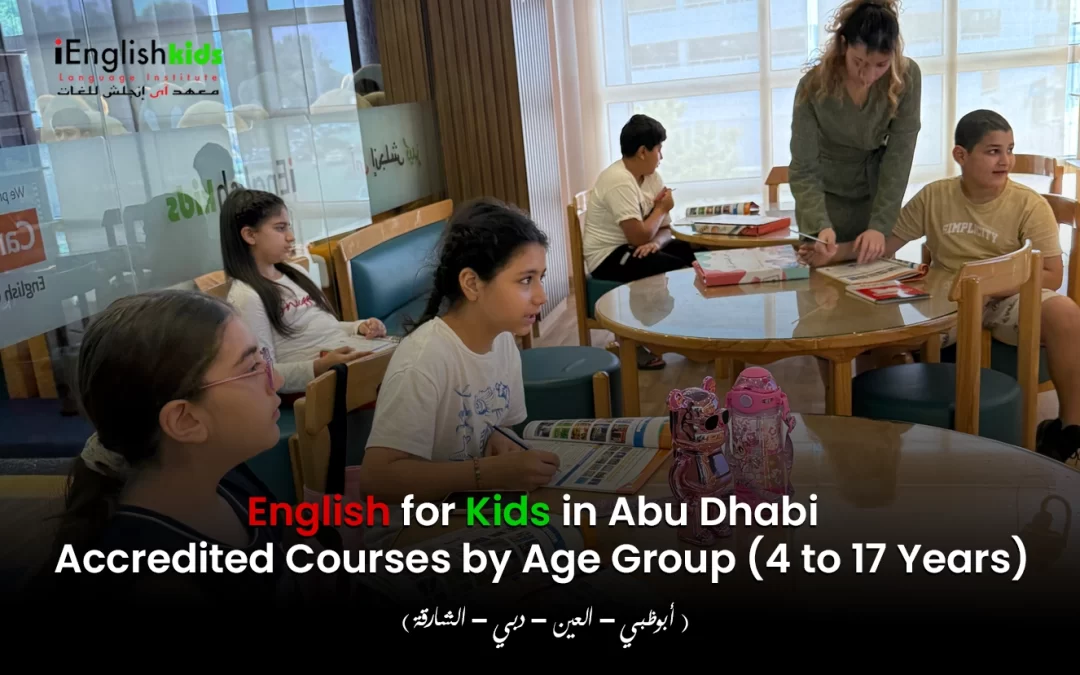
English for Kids in Abu Dhabi
Accredited Courses by Age Group
(4 to 17 Years)
Every age learns differently. That’s why our programs are designed specifically for each stage of your child’s development — from first words to university preparation.
01 Why Age-Specific English Courses Matter
A 5-year-old and a 15-year-old both need English — but they learn in completely different ways. Putting them in the same type of program is like giving the same medicine to different conditions and expecting it to work.
The brain at age 5 is wired for play-based language acquisition. At age 10, structured vocabulary building takes hold. By age 15, teens need purposeful, real-world English for academic and social success. One-size-fits-all programs fail all ages — which is exactly why iEnglish has developed five distinct programs, each calibrated for how children actually learn at that stage.
In Abu Dhabi, Al Ain, Dubai, and Sharjah, we’ve seen the difference this makes: children in age-appropriate programs progress 3 times faster than those placed in generic courses designed without developmental awareness.
02 All 5 Programs Explained — Ages 4 to 17
Here is a complete breakdown of each program, what it covers, and what your child will achieve:
The very first steps in English — and the most important ones. At ages 4-6, children are in their peak language acquisition window. Their brains absorb language effortlessly through play, music, stories, and movement. This program speaks that language fluently.
Every session is designed to feel like an adventure, not a lesson. Children build their first English words and phrases without even realizing they’re studying. By the end, they have a genuine foundation in spoken English that will support everything that follows.
At this age, children are curious, energetic, and ready to connect English to the world around them. This program channels that natural curiosity into rapid language development — building the vocabulary, comprehension, and speaking confidence they need as their school demands increase.
Sessions combine structured learning with games and group activities. Children practice speaking in real contexts: describing their weekend, talking about their favorite things, asking and answering questions — the building blocks of genuine conversation.
This is the most critical window for building lasting fluency. Children aged 10-12 are sophisticated enough to understand nuance but still in their high-plasticity language learning years. The program focuses on turning passive knowledge into active, confident communication.
Many children this age have been in English schools for years but still hesitate to speak. This program specifically addresses that gap — transforming what they know into what they can say, write, and present with genuine confidence.
Teenagers need English for school, social life, and their future careers. But teaching English to teens requires a different approach — one that respects their intelligence, connects to their real interests, and gives them something they actually want to use.
This program builds the kind of English that teenagers actually need: for group discussions, presentations, debates, interacting with international peers, and navigating the digital world in English. The confidence built here lasts a lifetime.
For students preparing for university in the UAE or abroad, English is not just a subject — it’s the gateway to their future. This program combines advanced English skills with targeted preparation for the exams that determine university placement.
Students work on EmSAT (required for UAE university admission), IELTS (required for international universities and professional licensing), and the advanced academic communication skills they’ll need from day one at university.
03 What Makes iEnglish Different for Children in Abu Dhabi
- ✓Officially accredited by ADEK and UAE Ministry of Education. Every program meets the highest standards set by Abu Dhabi’s education authorities — not just a private certificate, but genuine government recognition.
- ✓CELTA and DELTA certified teachers — specialists in teaching children. Our teachers don’t just know English — they’re trained specifically in how children at each age acquire language, what motivates them, and how to address common barriers.
- ✓Maximum 10 students per group — usually 6-8. This isn’t a policy — it’s a commitment. Small groups mean every child speaks in every session. In a class of 30, a child gets 90 seconds of speaking time. In our groups, they get 15-20 minutes.
- ✓Free placement assessment before enrollment. Every child is assessed individually before being placed in a program. We match them to the right level — not the right age group on paper. A fast learner won’t be held back; a child who needs extra support won’t be overwhelmed.
- ✓Monthly parent progress reports. You’ll know exactly how your child is progressing — what they’ve mastered, what they’re working on, and specific things you can do at home to support their development.
- ✓iEnglish learning app for at-home practice. The app extends learning beyond the classroom with games, stories, and exercises tailored to your child’s level — making English practice something children actually ask to do.
- ✓Branches in Abu Dhabi, Al Ain, Dubai, and Sharjah. No matter where in the UAE you are, a certified iEnglish branch is within reach — with the same curriculum, standards, and quality across every location.
04 What Parents in Abu Dhabi Are Saying
My 6-year-old used to refuse to speak English at home. After 8 weeks in the Little Stars program in Abu Dhabi, she sings English songs in the car and introduces herself to strangers in English. The teacher is extraordinary with young children.
My son is 13 and had zero confidence speaking English despite being in an English school his whole life. The Teen Achievers program completely changed that. He presented a project in English in front of 200 people last month. I cried.
My daughter needed 5.5 in IELTS for her university application. After the Pre-University program, she scored 7.0. The teacher knew exactly what the exam required and prepared her with precision. Worth every dirham.
05 Quick Comparison — All Age Groups at a Glance
| Program | Ages | Primary Focus | IELTS/EmSAT | Group Size |
|---|---|---|---|---|
| Little Stars | 4 – 6 | Play-based English foundations | — | Max 8 |
| Young Explorers | 7 – 9 | Vocabulary & first conversations | — | Max 10 |
| Junior Communicators | 10 – 12 | Fluency & academic English | Intro only | Max 10 |
| Teen Achievers | 13 – 15 | Communication & confidence | Introduction | Max 10 |
| Pre-University | 16 – 17 | Exam prep & advanced skills | Full Prep ✓ | Max 10 |
06 How to Choose the Right Program for Your Child
Age is a starting point — not the final answer. Here’s how to think about which program fits your child best:
- ✓Start with the free assessment. Our teachers have evaluated thousands of children. In one session, they can pinpoint your child’s exact level, identify their specific gaps, and recommend the right program with confidence. Don’t guess — let the specialists assess.
- ✓Consider your child’s goal, not just their age. A mature 11-year-old preparing for a competitive school entry may be better in Junior Communicators at a higher track. A 13-year-old who’s been in Arabic school their whole life may start in a lower track of Teen Achievers. We customize.
- ✓Think about urgency. If your 17-year-old has an IELTS requirement in 3 months, the Pre-University Track is the immediate priority. If your 6-year-old is just starting out, Little Stars at a comfortable pace is the right approach.
- ✓Ask about morning vs. evening schedules. All programs are available in both morning and evening sessions, plus weekend options. The best program is the one your child can attend consistently — consistency always beats intensity.
07 Frequently Asked Questions
Book Your Child’s
Free English Assessment Today
In one free session, our specialists will identify your child’s exact English level, recommend the right program for their age and goals, and give you a clear roadmap to fluency. No commitment required — just the first step toward your child’s confidence.