
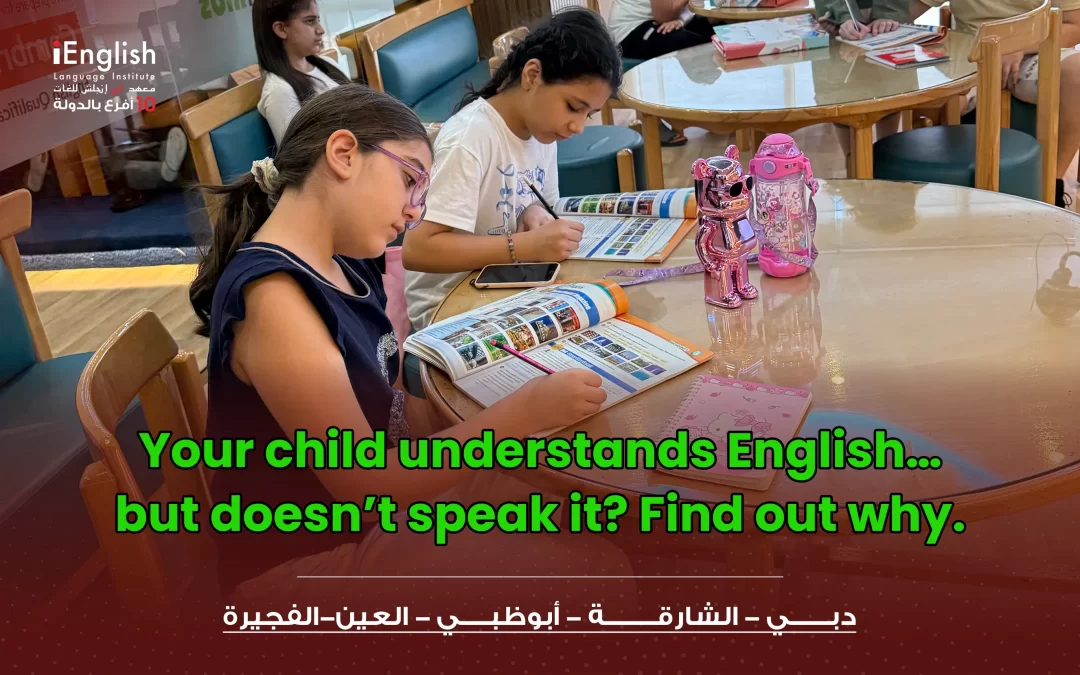
Your Child Understands English but Doesn’t Speak It? Find Out Why
If your child understands English but doesn’t speak it, this does not always mean your child is weak in English. Many children can understand classroom instructions, recognize words, watch cartoons in English, or follow simple conversations, but when it is time to answer, they stay silent or reply with one word only.
Your child understands English but stays silent? Start with a level assessment
We identify whether the problem is vocabulary, sentence building, pronunciation, confidence, or lack of speaking practice.
Book Assessment WhatsAppChild Understands English but Doesn’t Speak: Quick Answer
This article focuses on one specific problem: children who understand English but do not use it confidently. This is different from a general English course, phonics program, or school support article. The goal is to help parents understand the real reason before choosing the right speaking path.
Why Does a Child Understand English but Not Speak?
Fear of mistakes
Your child may know the answer but feel afraid of saying it wrong.
Weak sentence building
Your child knows words but cannot easily turn them into full sentences.
More listening than speaking
Your child receives English but rarely uses it in real conversation.
Pronunciation hesitation
Your child may avoid speaking because they are unsure how to pronounce words.
Classroom pressure
Some children speak at home but become quiet in front of teachers or classmates.
Wrong level
A class that is too easy or too difficult can reduce confidence and motivation.
What Skills Help Children Start Speaking English?
| Skill | How it helps your child |
|---|---|
| Sentence Building | Helps children turn the words they know into clear answers. |
| Daily Conversation | Gives children practice answering simple questions without pressure. |
| Pronunciation | Builds confidence when speaking in front of others. |
| Useful Vocabulary | Teaches words children can use at school, at home and in daily life. |
| Confidence | Encourages children to try speaking even if they make small mistakes. |
How iEnglish Kids Helps Your Child Speak
At iEnglish Kids, we do not treat silence as proof that a child cannot learn English. The first step is a level assessment. This helps us understand whether your child needs support with speaking, sentence building, pronunciation, vocabulary, or confidence.
- Level assessment before registration to find the real reason.
- Practice with daily questions and short useful sentences.
- Speaking activities that help children talk without pressure.
- Simple pronunciation correction in a child-friendly way.
- Confidence building inside an interactive classroom environment.
If your child’s main challenge is speaking, you can explore our English Speaking Classes for Kids. If your child needs a wider English learning path, visit our English Course for Kids. If your child is preparing for a school interview, read more about School Admission Test Preparation.
Available for Families Across iEnglish Branches
iEnglish Kids programs are suitable for families in Dubai, Sharjah, Abu Dhabi, Al Ain and Fujairah. Whether your child understands English but does not answer, or feels shy when asked to speak, we begin with a level assessment and recommend the right plan.
You can also watch iEnglish Kids activities or follow iEnglish Kids on Instagram to see how children practise English through interaction and classroom activities.
Help your child use English with confidence book an assessment today
We identify why your child is not speaking and recommend the right English speaking program.
Book from Website Chat on WhatsApp Instagram