
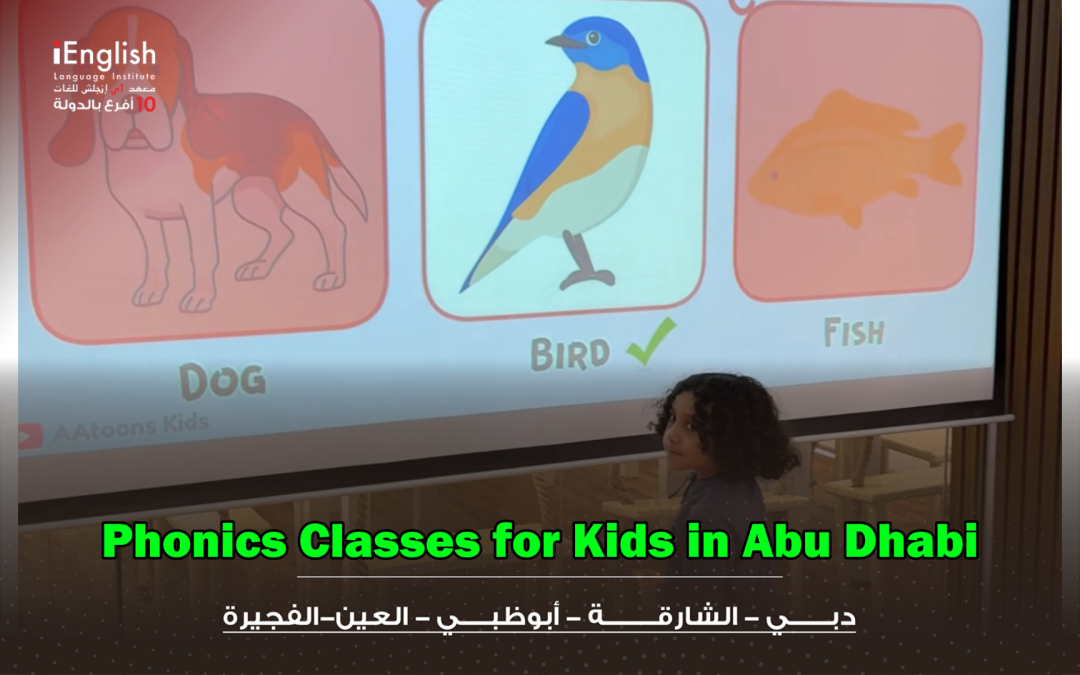
Phonics Classes for Kids in Abu Dhabi
Does your child know the alphabet but still struggle to read new English words? The problem may not be vocabulary. It may be the way your child connects letters with sounds.
Phonics Classes for Kids in Abu Dhabi help children build this connection. As a result, they can start reading words instead of memorising them.
Knows the letters but still guesses words?
Start with a level assessment and find out where the reading gap begins.
Book a Level Assessment WhatsApp UsHow Do You Know Your Child Needs Phonics?
Knowing the alphabet is not the same as knowing how to read. The difference becomes clear when your child sees a new word.
They guess from pictures
Your child looks at the picture or first letter instead of decoding the full word.
New words cause difficulty
Familiar words are easy. However, unfamiliar words slow your child down.
Reading is very slow
Your child stops often. Therefore, understanding the sentence becomes harder.
Spelling feels random
Your child hears the word but struggles to connect the sounds with letters.
What Do Phonics Classes for Kids in Abu Dhabi Teach?
A good phonics program follows a clear order. It does not rush children into difficult books too early.
| Skill | What the Child Learns |
|---|---|
| Letter Sounds | Connect each letter with its sound. |
| Blending | Join sounds together to read a word. |
| Segmenting | Break a word into sounds. |
| Spelling | Choose letters that match the sounds. |
| Reading | Decode new words with less guessing. |
First, children build strong sound awareness. Then, they practise blending. After that, they apply the same skill to words and short sentences.
Phonics Is Different from Memorising Words
A child can memorise the word cat. However, that does not always mean they can read hat or mat.
Phonics gives the child a method. They learn to look at the letters, use the sounds, and work out the word.
What Should Parents Look for in a Phonics Class?
Not every phonics class works in the same way. Before registering, check how the program is taught.
- Does the class begin from the child’s actual level?
- Does the child practise sounds and blending regularly?
- Are new words introduced gradually?
- Does the teacher correct guessing and show how to decode?
- Is progress checked through reading, not memorisation alone?
These points matter because children need practice they can use independently.
How Can You Measure Phonics Progress?
Progress is not only about reading harder books. Instead, watch how your child approaches a new word.
At first, your child may say each sound separately. Later, blending becomes faster. Eventually, familiar sound patterns become easier to recognise.
You may also notice fewer spelling mistakes. This happens because the child starts hearing the sounds inside words more clearly.
How iEnglish Kids Supports Early Reading
At iEnglish Kids, the starting point is the child’s current level.
First, we look at letter sounds and blending. Then, we identify where reading becomes difficult. This helps select the right starting point.
Children who need wider English development can also explore our English course for kids.
You can also view iEnglish Kids activities before registration.
Phonics Support for Families in Abu Dhabi
Families can ask about available learning options based on the child’s age, level, and reading needs.
Help your child decode words, not memorise them
Book an assessment and find the right phonics starting point.
Book Your Child’s Assessment Register on WhatsAppFrequently Asked Questions
Does my child need phonics if they already know the alphabet?
Possibly. Letter names are different from using letter sounds to read new words.
Can phonics help with spelling?
Yes. Segmenting words into sounds can support early spelling as well as reading.
How do I know where my child should start?
A level assessment can check letter sounds, blending, and reading before choosing the right starting point.