
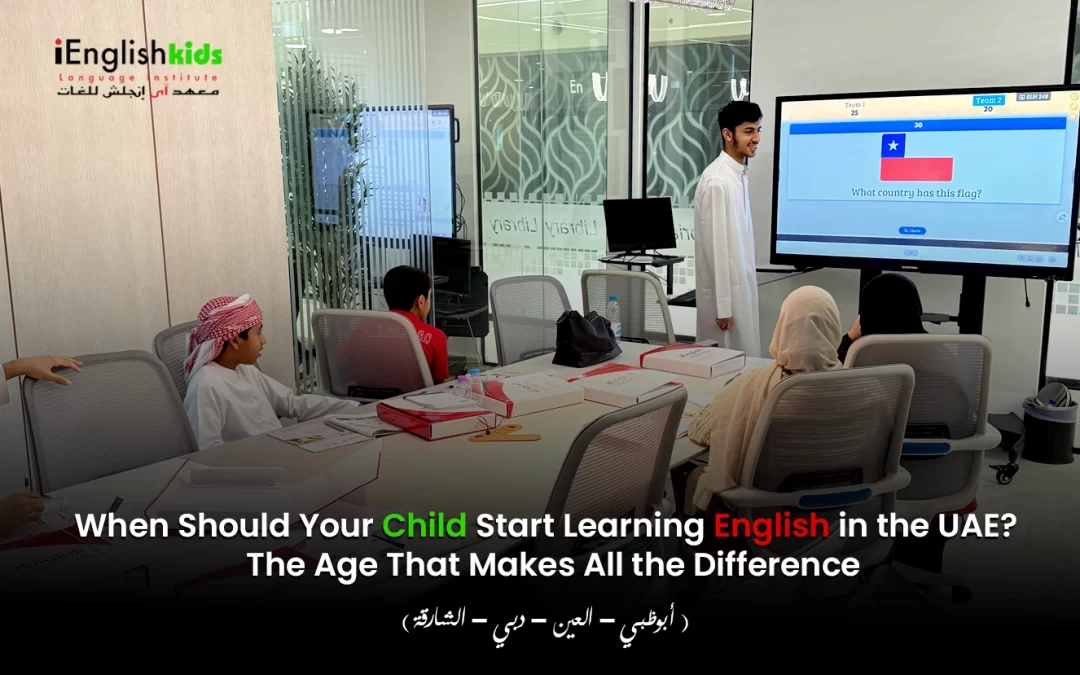
Learning English in Dubai and Abu Dhabi with the best in ienglish
If you are raising children in Dubai or Abu Dhabi, English becomes part of daily life very quickly. It is the language of school, activities, playdates, and, in many cases, the first language children hear outside the home. For expat parents, this usually leads to one important question: when is the right time for a child to start learning English?
The honest answer is simple: earlier is better. Children do not need to “wait until they are ready.” In many cases, they are ready long before adults expect them to be. At a young age, children absorb sounds, words, and sentence patterns naturally. They listen, repeat, and build confidence without treating language like a difficult academic subject.
That is why many expat families in the UAE choose to introduce English early. In a city like Dubai or Abu Dhabi, this gives children a real advantage. They are not just learning a subject. They are learning how to communicate, make friends, and feel comfortable in a multilingual environment.
Why early English learning matters in the UAE
For expat children, English is often the bridge that helps them settle into life in the UAE. They may be attending an international school, joining after-school activities, or interacting with children from many different nationalities. When English is familiar, everything feels easier.
A child who starts early usually develops better pronunciation, stronger listening skills, and more confidence when speaking. That confidence matters. Children who feel comfortable using English are more likely to participate in class, ask questions, and build friendships naturally. Over time, that affects not only language ability but also overall academic confidence.
Parents sometimes assume that English can wait until school begins. In reality, the earlier a child is exposed to the language, the more natural it becomes. Young children do not approach language with fear or pressure. They are curious. They repeat what they hear. They learn through rhythm, play, and routine. That makes the early years the ideal stage for building a strong foundation.
What is the best age to begin?
There is no single perfect age for every child, but many language specialists agree that the early years, especially between ages three and seven, are a powerful window for language learning. At this stage, children are especially open to new sounds and new words. They are less self-conscious, which means they are more willing to try.
This does not mean older children cannot learn well. They absolutely can. But younger learners often build a more natural accent and a more relaxed relationship with the language. They are not “studying” English in the way adults do. They are absorbing it as part of life.
For expat families in Dubai and Abu Dhabi, that matters. English is not only useful in school. It is useful in daily conversation, in the playground, at events, in shopping malls, and in countless ordinary moments. The earlier a child becomes comfortable with it, the smoother those moments become.
What happens when learning is delayed?
Many parents wait because they believe school will take care of everything. Sometimes it does, but not always in the way they hope. A child who starts too late may understand English passively but still struggle to speak. They may know the answers in their head but hesitate to say them out loud.
That hesitation can grow into shyness. And once a child starts to feel nervous about speaking, progress slows down. They may become dependent on memorizing instead of communicating. English then feels like homework rather than a useful skill.
Starting early helps prevent that problem. It gives the child time to get used to the sound of English, the structure of English, and the feeling of using it without stress.
How iEnglish supports children in Dubai and Abu Dhabi
At iEnglish, the goal is not to turn English into something heavy or intimidating. The focus is on helping children enjoy the process so they actually use the language with confidence.
Young learners do best when lessons feel active, engaging, and practical. That is why children respond so well to learning through games, guided speaking, repetition, and interactive activities. Instead of forcing children to memorize long lists, the right approach helps them understand, repeat, and use what they learn in real situations.
For expat families, that kind of support makes a difference. Children who are new to the UAE or still adjusting to international school life often need more than a textbook. They need encouragement, structure, and a place where they can practice speaking without fear.
iEnglish works with children in a way that feels natural. The sessions are built to help them become familiar with English step by step, while keeping the learning experience light and motivating. Over time, that builds real progress.
Why this matters for expat parents
For many parents living in Dubai or Abu Dhabi, the goal is not just “good English.” It is confidence, ease, and future readiness. They want their children to walk into school feeling prepared. They want them to communicate without stress. They want them to grow up in the UAE with language skills that support every part of their life.
That is exactly why starting early matters so much. It gives children time to grow into the language instead of rushing to catch up later.
If you are an expat parent in the UAE, the question is not whether your child should learn English. The real question is how early you want to give them the advantage.
Final thought
Children do not need a perfect moment to begin learning English. They need the right environment, the right guidance, and enough time to grow into the language naturally. In Dubai and Abu Dhabi, where English is part of everyday life, starting early can make a lasting difference.
With the right support from iEnglish, children can build confidence, improve communication, and develop a strong foundation that stays with them for years.
🎥 TikTok