
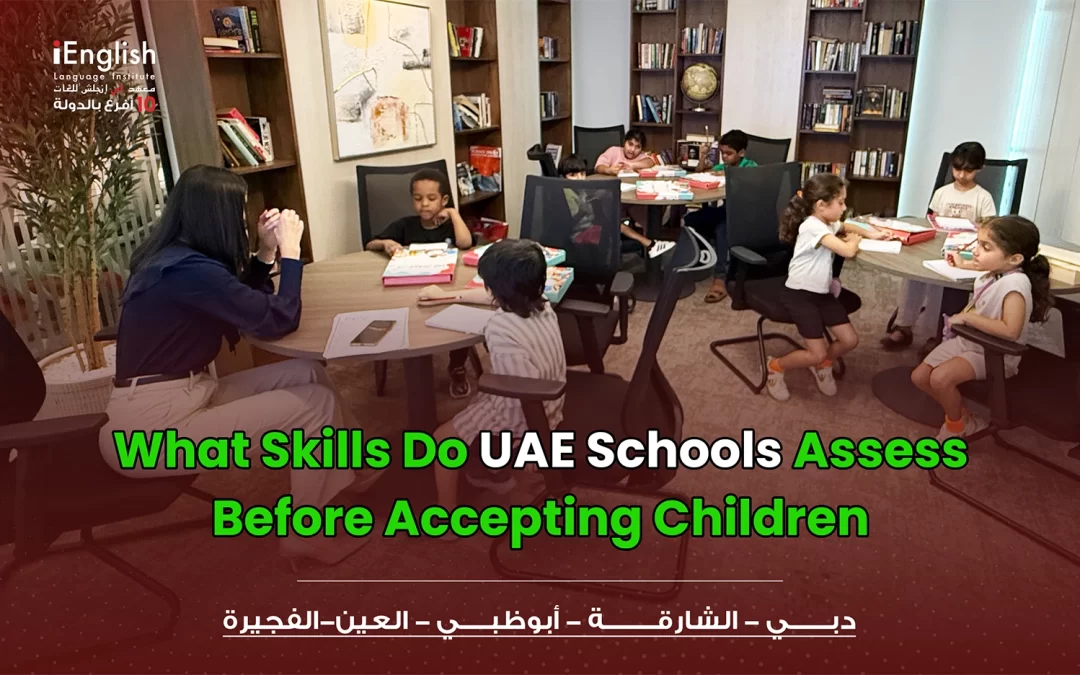
What Do Schools Assess When Accepting Children in the UAE?
Build Skills. Boost Confidence. Start Strong.
When parents start looking for the right school for their child in the UAE, one important question often comes up: what do schools assess when accepting children?
Do schools focus only on reading and writing? Will the child be asked questions in English? Is the assessment difficult? Does the child need to speak English fluently before joining?
The truth is that school admission assessments in the UAE differ from one school to another. The process depends on the curriculum, the child’s age, the grade level, and the school’s admission policy. Some schools conduct a simple interview, while others may assess reading, writing, basic math, speaking, or the child’s behavior and interaction in a classroom-like environment.
However, the main goal is usually not to put pressure on the child. Schools want to understand how ready the child is for the next academic stage. Can the child follow instructions? Can they communicate? Do they have basic reading and writing skills? Can they sit, focus, and interact with the teacher confidently?
Is There One Standard Admission Test for All Schools in the UAE?
No, there is no single standard admission test for all schools in the UAE. Each school decides its own assessment method depending on the curriculum and age group.
For younger children, the assessment may be closer to an observation activity, where the teacher watches how the child plays, listens, responds, and interacts. For older children, the assessment may include clearer academic tasks such as reading, writing, math, and speaking.
That is why parents should prepare children through real skills, not memorized answers. Questions may change, but skills stay with the child.
1. Speaking and Self-Expression
One of the first things schools may notice is the child’s ability to speak and express themselves. The child does not need to speak in long or perfect sentences, but they should be able to answer simple questions with confidence.
The teacher may ask questions such as:
- What is your name?
- How old are you?
- What color is this?
- What do you see in the picture?
- Do you like school?
- What is your favorite animal?
These questions help the school understand whether the child can communicate, understand the question, and answer without too much fear.
Many children know the answer but feel nervous in front of a new person. This is why speaking practice before the school interview can help the child feel more comfortable and confident.
2. Understanding Classroom Instructions
Schools pay close attention to whether the child can understand instructions. This skill is important because it affects how the child performs inside the classroom.
The teacher may ask the child to:
- Point to the book.
- Circle the red object.
- Write your name.
- Sit down, please.
- Choose the big one.
- Match the picture with the word.
These instructions may seem simple, but they show a lot about the child’s readiness. Does the child listen? Do they understand what is required? Can they complete the task? Do they need the instruction repeated many times?
If a child does not understand basic English instructions, they may feel stressed during the assessment, even if they are smart and know the answer. That is why practising simple classroom instructions in English is very helpful before admission assessments.
3. Reading, Letters, and Word Recognition
Reading is one of the important skills schools may assess, especially if the child is applying for a grade where English is used as the main language of instruction. For younger children, the school may check whether the child knows letters and sounds. For older children, the school may ask them to read short words or simple sentences.
Reading skills may include:
- Recognizing English letters.
- Identifying letter sounds.
- Reading short words.
- Reading simple sentences.
- Understanding the meaning of words or sentences.
- Not depending only on memorizing word shapes.
- Reading new words through sounds.
This is where phonics becomes important. Phonics helps children connect letters with sounds, which allows them to read new words instead of only memorizing words by shape.
If your child knows the letters but cannot read words, they may need extra support in phonics.
4. Writing and Pencil Skills
Writing does not mean that a young child must write a full paragraph. Expectations depend on the child’s age and grade level. In some cases, the child may only need to write their name, copy letters, or write simple words. In higher grades, the child may be asked to write a short sentence or a small paragraph.
Schools may observe:
- Pencil grip.
- Clear letter formation.
- Ability to write the child’s name.
- Copying words or sentences.
- Arranging words in a sentence.
- Using age-appropriate vocabulary.
- Writing without extreme stress.
If a child struggles with writing, it does not mean they are not capable. It means they need regular practice. Writing is a gradual skill that improves with repetition, patience, and encouragement.
5. Basic Math Skills
Some schools may assess simple math skills, especially for grades that require a clearer academic level. For younger children, this may include numbers, counting, shapes, size comparison, or recognizing quantities.
The child may be asked to:
- Count from 1 to 10 or higher.
- Recognize numbers.
- Identify basic shapes.
- Compare big and small.
- Choose the correct number of objects.
- Solve simple age-appropriate math questions.
The goal is not to give the child a difficult math test. The school wants to know whether the child has basic skills that will help them follow classroom lessons.
6. Confidence and Interaction with the Teacher
Confidence is one of the most important things that appears during a school assessment. Sometimes a child can read or answer correctly, but they stay silent because they are shy or afraid.
That is why schools do not only look at the answer. They may also observe how the child handles the situation.
- Does the child look at the teacher?
- Does the child try to answer?
- Does the child interact with the picture or activity?
- Does the child need the parent beside them all the time?
- Can the child sit and focus for a short time?
These points help the school understand the child’s social and emotional readiness, not only academic ability.
7. School Readiness and Classroom Behavior
For younger children, schools may also look at school readiness. This means whether the child is ready to enter a school environment.
School readiness may include:
- Sitting for a short period.
- Listening to the teacher.
- Joining a simple activity.
- Following instructions.
- Using words to express needs.
- Interacting with other children.
- Feeling less afraid of a new place.
- Moving from one activity to another.
These skills help children adapt faster inside the classroom.
How to Prepare Your Child for What Schools Assess
The best way to prepare your child is to build skills, not memorize answers. Keep practice simple, daily, and pressure-free.
You can start with these steps:
- Practise self-introduction.
- Read short words together every day.
- Use pictures and ask: What do you see?
- Practise writing the child’s name.
- Use simple English instructions.
- Review letters and sounds through phonics.
- Ask the child to describe objects around them.
- Practise numbers, colors, and shapes.
- Encourage the child even when they make mistakes.
- Do not tell the child that the test is scary or difficult.
The calmer and more organized the preparation is, the more confident the child becomes.
How iEnglish Kids Helps Prepare Children
At iEnglish Kids, the focus is on the real skills schools may assess when accepting children: reading, writing, speaking, phonics, pronunciation, understanding instructions, and building confidence.
The program helps children:
- Learn phonics in an age-appropriate way.
- Read simple words and sentences.
- Improve writing gradually.
- Speak in short sentences.
- Answer simple questions.
- Understand classroom instructions.
- Improve pronunciation and listening.
- Build confidence in front of the teacher.
- Prepare better for school assessments.
The goal is not only for the child to know English words. The goal is for the child to use English confidently in a real situation.
When Does a Child Need a Course Before the School Assessment?
Your child may need a foundation course if you notice that they:
- Know the letters but cannot read words.
- Feel afraid to speak English.
- Cannot write their name or simple words.
- Do not understand English instructions.
- Mix up sounds and letters.
- Read very slowly.
- Need support with confidence and interaction.
If you notice these signs, it is better to start early instead of waiting until the assessment date.
Final Thoughts
When accepting children, schools in the UAE may assess speaking, reading, writing, phonics, understanding instructions, basic math skills, confidence, and school readiness. The assessment method differs from one school to another, but the core skills are often similar.
If you want to prepare your child for a school admission assessment in Dubai, Abu Dhabi, Sharjah, Al Ain, or Fujairah, start by building the basics calmly and consistently. With a program like iEnglish Kids, your child can enter the assessment with stronger confidence and better readiness.
Start today with a level assessment and discover the skills your child needs before the school interview.
Frequently Asked Questions
What do schools assess when accepting children in the UAE?
Schools may assess speaking, reading, writing, understanding instructions, confidence, basic math skills, and school readiness depending on the child’s age and grade level.
Do all UAE schools have the same admission test?
No, there is no single standard admission test. Each school may use a different assessment method depending on the curriculum and age group.
Are reading and writing important for school admission?
Yes, reading and writing are important skills, especially in English-medium schools or grades that require a clear academic foundation.
Is phonics important before a school assessment?
Yes, phonics helps children read new words, improve pronunciation, and build spelling skills. It is a strong foundation for reading and writing.
How can I prepare my child for a school assessment?
Start by improving speaking, reading, writing, phonics, understanding instructions, numbers, colors, and confidence through simple pressure-free practice.
Can iEnglish Kids help prepare my child for school?
Yes, iEnglish Kids helps children develop phonics, reading, writing, speaking, pronunciation, and understanding instructions before school assessments.