
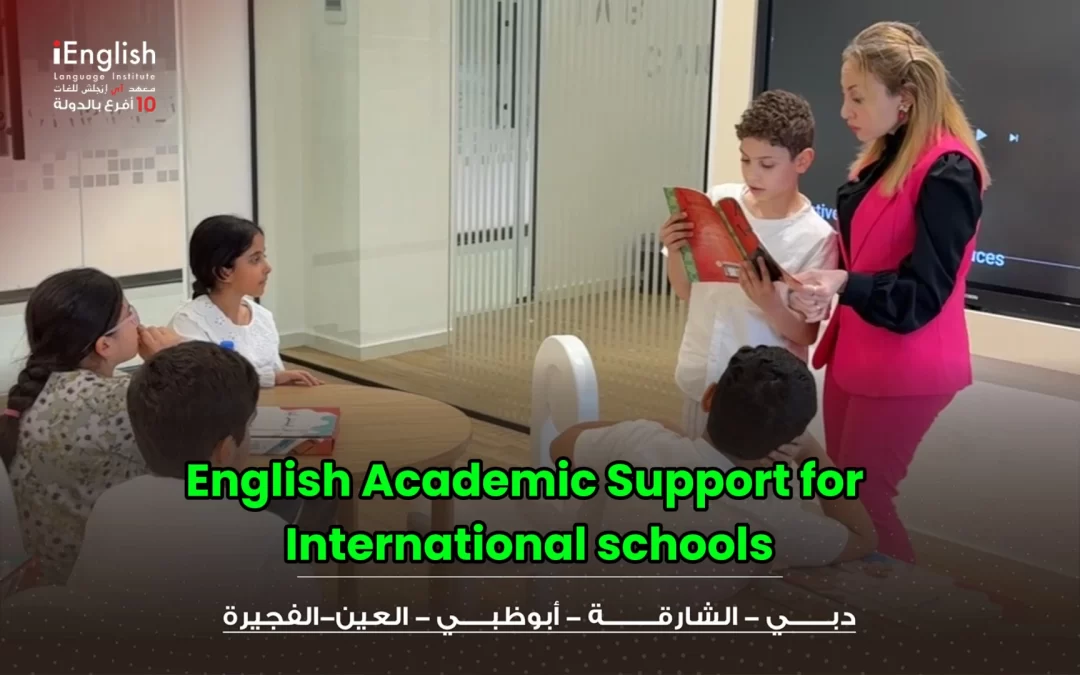
English Academic Support for International Schools
Your child may speak English confidently with friends but still struggle with school questions, written answers, or academic vocabulary. This often becomes clearer after the first weeks of school. English Academic Support for International Schools focuses on the language skills that directly affect classroom performance.
First, identify where your child gets stuck. Then, choose support for that specific skill instead of adding more general English lessons.
Does your child understand English but struggle with schoolwork?
Start with a level assessment and identify whether the gap is reading, writing, vocabulary, sentence building, listening, or speaking.
Book a Level Assessment WhatsApp UsWhat Is English Academic Support for International Schools?
A child can have good conversational English and still find academic tasks difficult. For example, they may understand the teacher but struggle to write the same idea in a complete sentence.
Therefore, school English and everyday English should not always be treated as the same skill.
Signs Your Child May Need Extra Support
📖 Questions feel difficult
Your child reads the task but does not fully understand what is required.
✏️ Answers are too short
They know the idea but cannot develop it into a clear written answer.
💬 Participation is limited
They understand the lesson but hesitate when asked to explain something.
🏫 Homework takes too long
English-based assignments need constant help from a parent.
Why Can International School English Be Difficult?
International school students need English for much more than conversation. They must understand instructions, subject vocabulary, reading passages, and written questions.
This can be challenging for multilingual children. For example, Russian-speaking or Spanish-speaking children may communicate well in English but still need stronger academic vocabulary and writing skills.
As a result, the difficulty may appear in science, mathematics, or other subjects too.
What Does a Level Assessment Check?
| What You Notice | Possible Skill Gap |
|---|---|
| Misses important details while reading | Reading Comprehension |
| Cannot develop written answers | Writing & Sentence Building |
| Struggles with school vocabulary | Academic Vocabulary |
| Understands but avoids answering | Speaking & Listening |
Once the gap is clear, the learning plan becomes more focused. This prevents the child from repeating English skills they already understand.
How iEnglish Kids Supports School Performance
At iEnglish Kids, support starts from the child’s current level. The goal is to strengthen the English skills that make schoolwork easier and more independent.
- Reading and understanding school texts.
- Writing clear and complete answers.
- Building useful academic vocabulary.
- Improving sentence structure.
- Developing speaking and listening confidence.
Children who need broader development can explore the English course for kids. If speaking is the main difficulty, see the English speaking classes for kids.
Academic Support Is Not Just Homework Help
The goal is not to complete homework for the child. Instead, the child learns how to understand the question, organise the idea, and answer independently.
For example, if your child can explain an answer aloud but cannot write it, writing structure may be the main gap. However, if they do not understand the question, reading comprehension should come first.
Support for International School Families in the UAE
Families in Dubai, Abu Dhabi, Sharjah, Al Ain, and Fujairah may follow different school curricula. However, the right support should still start from the child’s individual English level.
For children who need individual support, learn more about an English tutor for kids. Parents can also explore English learning articles or visit iEnglish Language Institute.
When Should You Start?
If the same school difficulty appears every week, it is better to identify it early. Small gaps in comprehension or writing can become more noticeable as school tasks become harder.
In the end, the aim is simple: help your child understand instructions, express ideas, and complete school tasks with more confidence.
Schoolwork is getting harder? Find the language gap first.
Book a level assessment and identify the exact English skills your child needs for school.
Book the Assessment Book on WhatsAppFrequently Asked Questions
Who needs academic English support?
Children who understand everyday English but struggle with reading questions, writing answers, school vocabulary, or classroom communication may need focused support.
Is academic support different from regular English classes?
Yes. Academic support focuses on the English skills that directly affect schoolwork and classroom performance.
Should my child take a level assessment first?
Yes. An assessment helps identify the main skill gap before choosing the right support.