
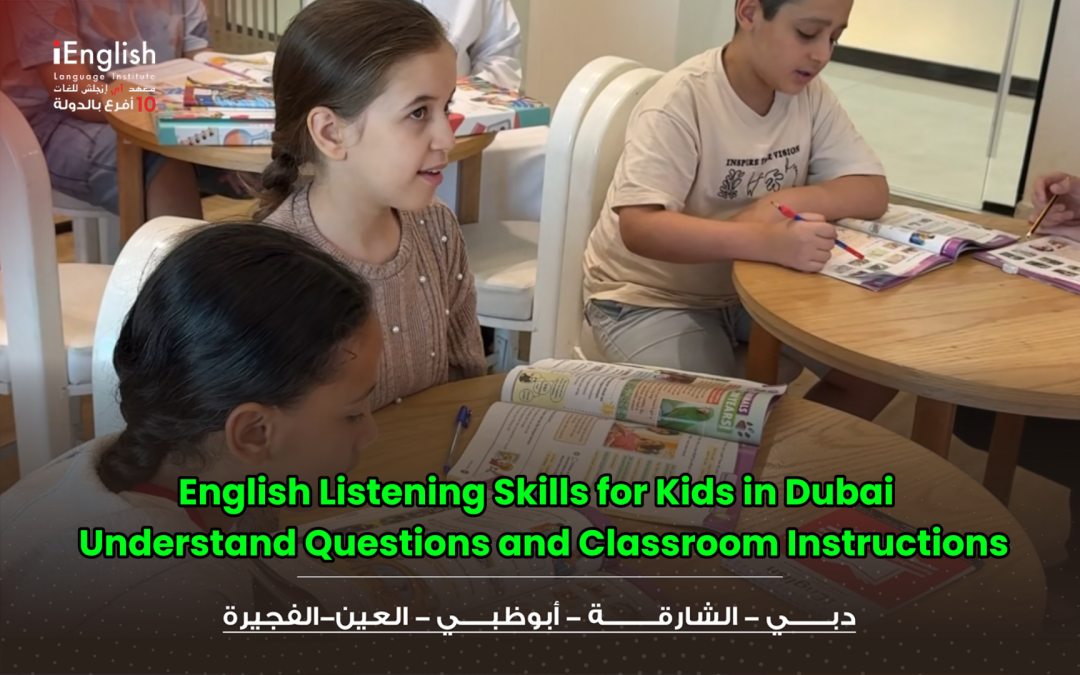
English Listening Skills for Kids in Dubai: Understand Questions and Classroom Instructions
The teacher explains an activity, but your child waits to see what everyone else does. Developing English listening skills for kids in Dubai can help children understand classroom language and respond more independently. The first step is finding out which words or instructions cause difficulty.
Your child may understand a familiar question yet struggle when its wording changes. At iEnglish Kids, discuss these situations with the team and ask about a level assessment and suitable English learning options.
Does Your Child Miss Classroom Instructions?
Share your child’s age, school year and an example of what they find difficult. Ask about assessment and available support in Dubai.
How Can English Listening Skills for Kids in Dubai Improve?
Start with spoken language the child can understand, then gradually add new vocabulary and longer instructions. Useful practice involves listening for a purpose: choosing a picture, following a direction or answering a question. Check understanding through the child’s response, rather than asking only, “Do you understand?”
What Should Parents Look For?
- Your child starts the task only after watching a classmate.
- They answer a different question from the one asked.
- They complete the first instruction but miss the next step.
- They understand with pictures but struggle without them.
- They often need classroom words explained in another language.
These observations help identify a teaching priority; they do not explain the cause on their own. Ask the school which situations are difficult and whether shorter instructions or familiar vocabulary make a difference.
Why Familiar English Can Be Hard to Follow
Recognising a word on a flashcard is different from recognising it within a spoken sentence. Classroom instructions can also contain unfamiliar action words such as “circle”, “match”, “compare” or “underline”.
Longer directions add another challenge: the child must understand the words and keep track of what comes next. Practice can begin with one clear action, then build towards a short sequence as understanding becomes more secure.
Four Useful Listening Goals
Recognise Action Words
Connect classroom verbs with actions. For example, distinguish between pointing to an answer and drawing a circle around it.
Understand Questions
Practise the difference between “who”, “where” and “why”. Help your child recognise what kind of answer each question needs.
Follow a Sequence
Move from a single instruction to two related steps. Check that the child understands the vocabulary before increasing difficulty.
Ask for Clarification
Practise useful phrases such as “Could you repeat that, please?” and “What should I do next?” Asking for help supports participation.
What Does Focused Listening Practice Look Like?
| Practice task | What it helps you observe |
|---|---|
| “Put the pencil under the book.” | Understanding objects and position words |
| Listen to a short description and choose a picture. | Recognising key details in spoken language |
| “Open your book, then point to the title.” | Following two related instructions |
| Listen to a short story and identify where it happens. | Understanding a question and finding relevant information |
Keep the language suitable for your child’s level. If a task is difficult, simplify it and identify the unfamiliar part rather than repeating the same instruction more loudly.
Discuss Listening Support with iEnglish Kids
The published iEnglish Kids programmes describe assessment of children’s abilities and materials adapted to their needs. Stories, games and conversations provide contexts for practising English at different learning levels.
When enquiring, explain whether your child needs help with spoken questions, classroom vocabulary or longer instructions. Explore our English course for kids in Dubai and ask how listening activities could address those needs within the available programme.
English Learning in Al Garhoud, Dubai
The iEnglish Kids Dubai branch is located in Zalfa Building, Al Garhoud. Contact the team for the location pin, current schedules and age-appropriate learning options. Bring recent teacher feedback to make the discussion specific to your child.
You can also use our contact page to describe your priorities. Confirm the lesson format and how progress will be reviewed before choosing a programme.
Look for Progress in Everyday Tasks
Useful signs include needing fewer repetitions, following a familiar instruction independently and asking a relevant clarification question. Compare similar tasks over time; one difficult lesson does not tell the whole story.
Explore iEnglish Kids on Instagram and our activities reel to see the learning atmosphere. Ask the team which activities suit your child’s level and goals.
Make the Next Classroom Instruction Clearer
Contact iEnglish Kids to discuss your child’s English listening needs, arrange a level assessment and explore suitable learning options in Dubai.
Frequently Asked Questions
Can a child speak English but struggle with listening?
Yes. A child may use familiar phrases while finding new vocabulary, different question wording or longer spoken instructions difficult. Discuss specific examples during assessment.
Should I translate every instruction?
Translation can clarify meaning when needed. For English practice, also use familiar words, actions or pictures, then check whether your child can follow the instruction with less support.
What should I bring to a level assessment?
Share your child’s age, school year, language background and teacher feedback. Bring examples of questions or instructions they find difficult to understand.