
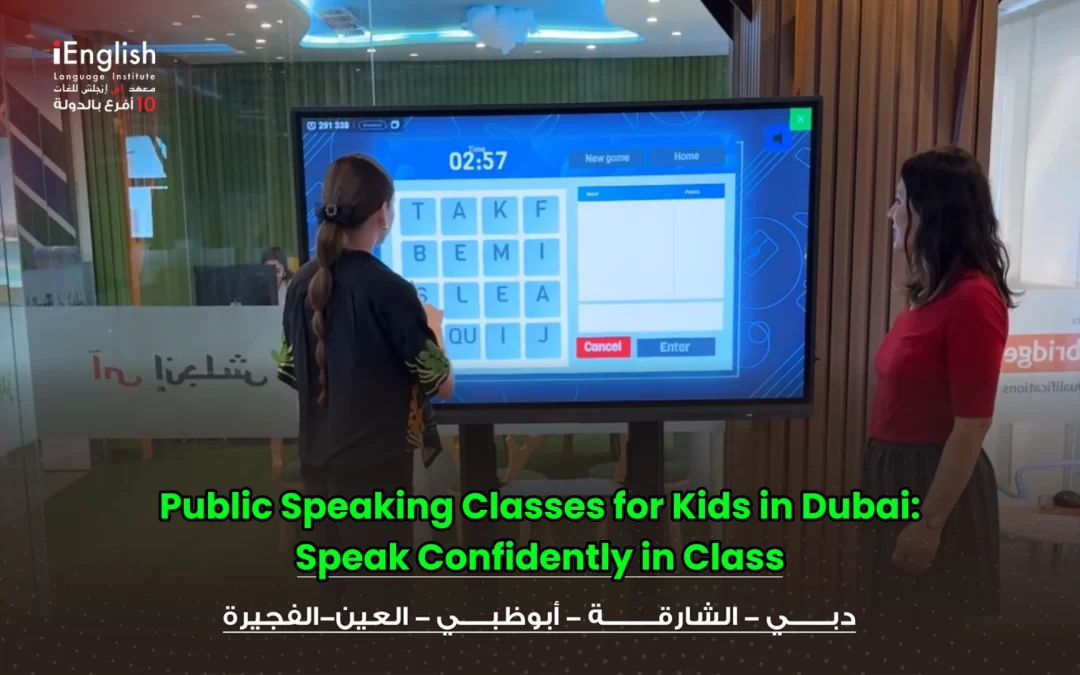
Public Speaking Classes for Kids in Dubai: Speak Confidently in Class
A school presentation involves more than remembering a script. Children need to organise ideas, explain them clearly and respond when someone asks a question. These skills matter in show-and-tell, group projects and everyday classroom discussions.
When choosing public speaking classes for kids in Dubai, look for practice that matches your child’s starting point. Some children need help building English sentences. Others already speak comfortably but need a clearer structure for presenting ideas.
What Does Your Child Need Help With?
Tell iEnglish Kids your child’s age, English level and speaking goal. Ask which available programme can support classroom communication and presentation practice.
Four Skills That Make Classroom Speaking Easier
Organising an idea
Choose a main point, add a useful detail and finish with a clear ending.
Speaking clearly
Practise an audible voice, a comfortable pace and pauses that help listeners follow.
Explaining with examples
Move beyond a short answer by adding a reason, description or personal example.
Handling questions
Listen to the question, take thinking time and ask for clarification when needed.
Conversation or Public Speaking: Which Comes First?
Conversation involves exchanging ideas with another person. Public speaking adds the task of guiding an audience through a message. Both use language, but they place different demands on the speaker.
If your child struggles to form everyday sentences, discuss language support first. Explore our English speaking classes for kids in Dubai. If language comes easily but presentations feel disorganised, ask about practice in planning and delivery.
What Useful Speaking Practice Looks Like
A child does not need a long speech to start. Short, familiar topics give them room to focus on one skill at a time. The teacher can increase the challenge as participation becomes easier.
| Activity | Speaking goal | Classroom connection |
|---|---|---|
| Describe a favourite object | Name it and explain why it matters | Show-and-tell |
| Retell a short story | Put events in a clear order | Discussing a reading task |
| Explain a simple process | Use steps and clear instructions | Presenting a project |
| Answer a follow-up question | Respond beyond a prepared script | Class discussions |
How to Choose Public Speaking Classes for Kids in Dubai
Ask what children actually do during a lesson. Look for repeated speaking opportunities, useful feedback and tasks suited to their age and English ability.
- How does the teacher identify each child’s starting point?
- How much time does each child spend speaking?
- Can a hesitant child begin with a partner or small audience?
- Do activities include questions as well as prepared talks?
- How will parents see progress across different tasks?
Confirm the programme content, age range, teaching location and timetable before registering. For a specific school presentation, bring the teacher’s instructions so you can explain the goal clearly.
Discuss Your Child’s Goals with iEnglish Kids
iEnglish Kids’ published courses use interactive situations to develop communication. Teachers assess children’s abilities and adapt materials to their needs, with stories, games and conversations across learning levels.
Browse our English courses for children, then ask whether the available programme includes the presentation activities your child needs. For Dubai, confirm current options with the Al Garhoud team.
You can also explore iEnglish Kids activities on Instagram before discussing the next step.
How Can You Recognise Progress?
Look for practical changes: a clearer opening, less reliance on an adult’s prompts, a useful example or a thoughtful answer. Compare your child’s own attempts over time. Confidence can grow gradually, and being a quiet child does not prevent clear communication.
Build a Clear Plan for Classroom Speaking
Share your child’s age and one speaking task they find difficult. Contact iEnglish Kids to discuss their English level and suitable learning options in Dubai.
Frequently Asked Questions
Can a shy child benefit from speaking practice?
Supportive practice can give a child manageable opportunities to participate. Start with familiar topics and a comfortable audience, then adjust the challenge gradually.
Does my child need fluent English before starting?
Tasks should match their current language skills. A beginner may need vocabulary and sentence practice before attempting a longer presentation.
Should my child memorise the whole presentation?
Understanding the main ideas and practising their sequence can help children explain naturally. Picture prompts or short notes may suit the task better than memorising every word.